
Violations of Citizenship, Due Process, and Equal Protection, can result in…

…wrongful incarceration.
As such, it is time to review and study…
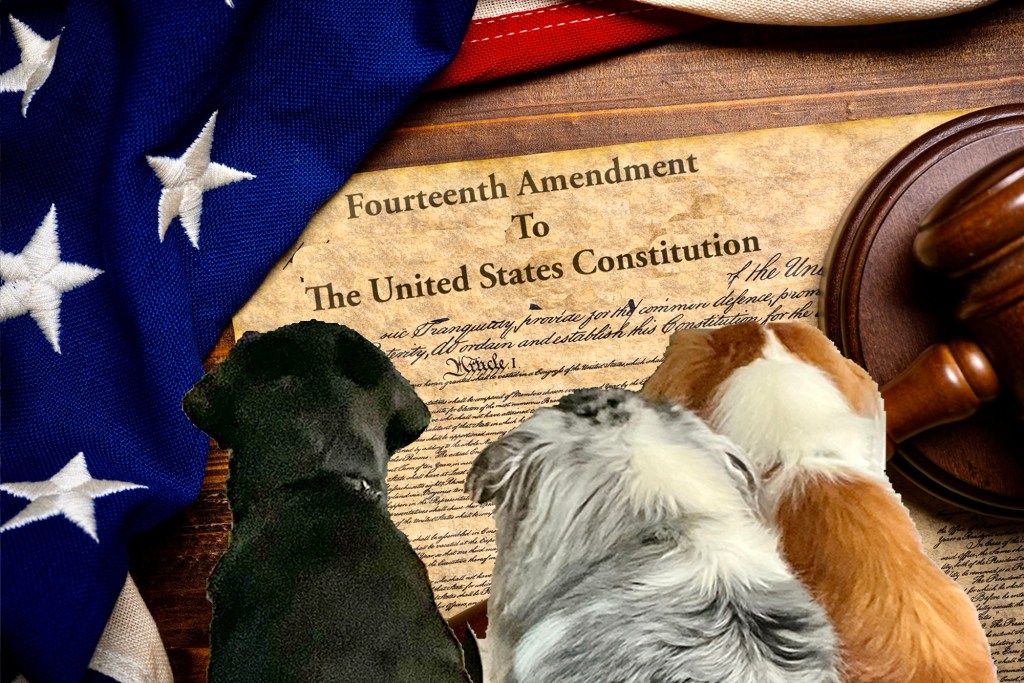
…The Fourteenth Amendment To The United States Constirution.
On July 28, 1868, Secretary of State William Seward issued a proclamation certifying without reservation that the Fourteenth Amendment was a part of the United States Constitution. The required number of states had ratified the Fourteenth Amendment a few weeks earlier on July 9, 1868. Known as one of the “Reconstruction Amendments” along with the Thirteenth and Fifteenth Amendments, the Fourteenth Amendment forbids any state to deny to any person “life, liberty or property, without due process of law” or to “deny to any person within its jurisdiction the equal protection of the laws.” With its broadly phrased language, the Fourteenth Amendment continues to provide a basis for civil rights claims in the United States.
Congressman John A. Bingham of Ohio, the primary author of the first section of the 14th Amendment, intended that the amendment also nationalize the Bill of Rights by making it binding upon the states. When introducing the amendment, Senator Jacob Howard of Michigan specifically stated that the privileges and immunities clause would extend to the states “the personal rights guaranteed and secured by the first eight amendments.” Historians disagree on how widely Bingham’s and Howard’s views were shared at the time in the Congress, or across the country in general.
A legacy of Reconstruction was the determined struggle of Black and White citizens to make the promise of the 14th Amendment a reality, they effectively articulated arguments and offered dissenting opinions that would be the basis for change in the 20th century.
Soon after ratification, the Slaughterhouse Case tested the scope of the Fourteenth Amendment. Brought before the U.S. Supreme Court in 1873, the suit argued that the monopoly the Louisiana legislature granted to a New Orleans slaughtering company abridged other businessmen’s privileges as American citizens and deprived them of property without due process of the law. The court ruled against the slaughterhouses, narrowly interpreting “the privileges and immunities” of citizens and stating that the amendment did not extend to the property rights of businessmen.
Women tried to use the new amendment to affirm their right to vote. In 1871, Sara J. Spencer and Sarah E. Webster brought their cases before the District of Columbia court arguing that they were enfranchised by the Fourteenth Amendment. Their lawyers argued that while District law specified that “male residents” could vote, passage of the Fourteenth Amendment nullified that requirement. …in the presence of the first section of the Fourteenth Amendment, which confers the elective franchise upon “all persons,” this word “male” is as if unwritten, and, [therefore], the statute, constitutionally, reads, “That all citizens shall be entitled to vote.”
On May 18, 1896, the Supreme Court ruled in the case of Plessy v. Ferguson that “separate but equal” facilities were considered sufficient to satisfy the Fourteenth Amendment. This decision established a pattern in American society, until May 17, 1954, when the Court reversed the Plessy decision. In the case of Brown v. the Board of Education of Topeka (argued for Brown by Thurgood Marshall), the Court held that segregation of public schools is a denial of equal protection under the law.
Source… US National Archives, Library Of Congress
 Doggedly Yours
Equality only extends to those deemed equal by this administration. Also, look over your post. You’ve got some paragraphs that are repeated more than once. Thanks, once again, for the good information.
LikeLiked by 1 person
You always provide such fascinating stories with great backgrounds. This one in particular seems particularly relevant these days. Sadly I fear the current administration is running roughshod over it (as well as a few others) but I hope people come away with actual facts.
LikeLiked by 1 person