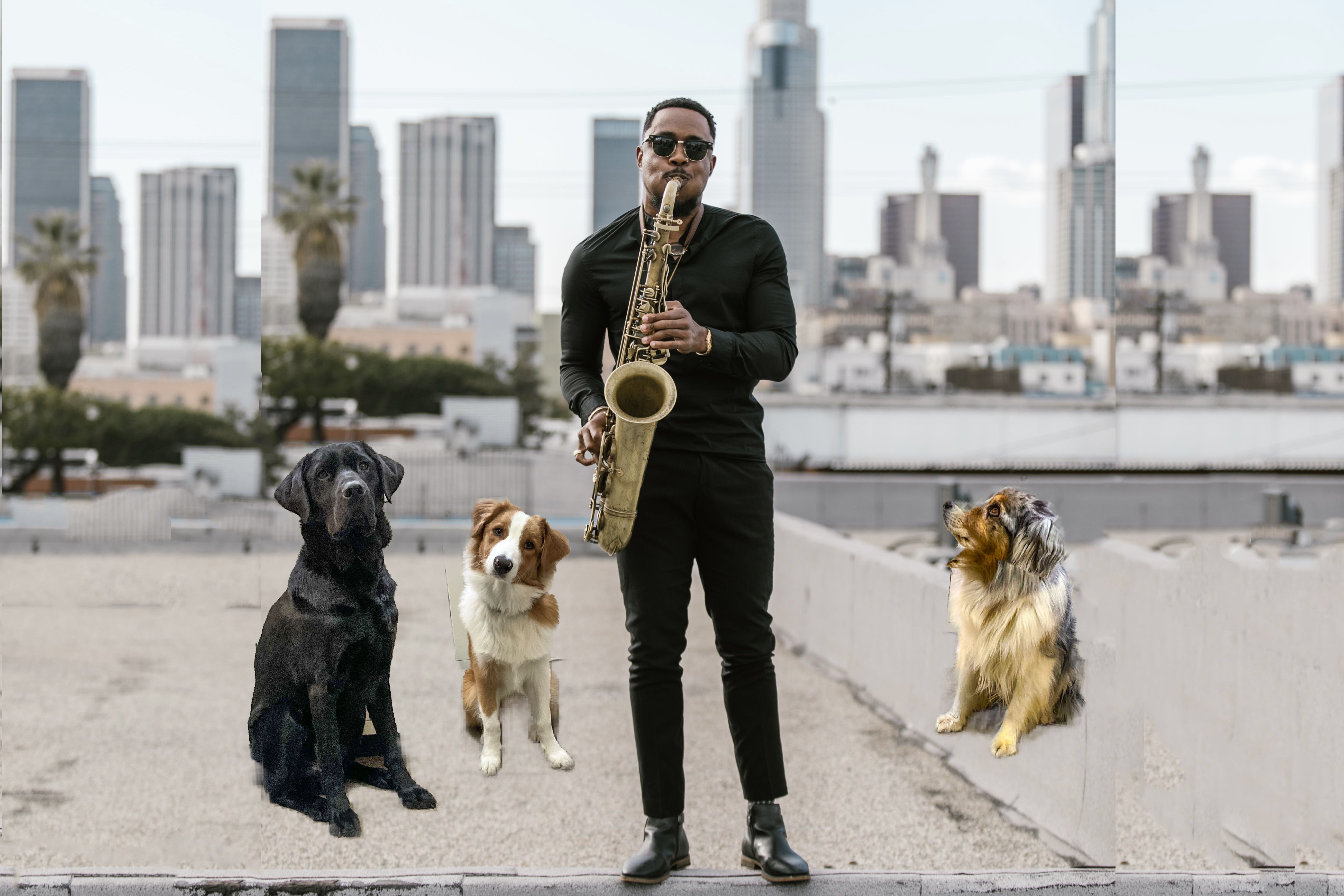
Adolphe Sax, (born November 6, 1814, Dinant, Belgium—died February 7, 1894, Paris, France), Belgian-French maker of musical instruments and inventor of the saxophone.
Hit on the head with a brick. Swallowed a needle. Drank sulfuric acid. Fell face-first on a searing skillet. These were just a few near-misses in the life of Adolphe Sax, an incredibly accident-prone child who was born in Belgium in 1814 and one of 11 children in his family to make it to puberty (barely.
~~~ SAX ROCK AND ROLL SONG INTRO’S ~~~

For instance, he once thought a certain liquid to be milk and actually drank some diluted sulfuric acid. He was hit on the head by a stone, nearly drowned in a river, and poisoned three times by varnish. He also swallowed a needle and fell from a three-story window. There’s little wonder why his mother, nerves likely frayed, bemoaned: “He’s a child condemned to misfortune; he won’t live,” and that his nickname was “little Sax, the ghost”.
No one thought Adolphe Sax would make it past childhood after his myriad near-death experiences. But he did — and invented an instrument that revolutionized the music world
Born into a family of tradesmen, Antoine-Joseph or Adolphe Sax’s father was originally a carpenter. He was so gifted with wood, in fact, that he was tapped by William I of Orange, the ruling monarch of the region at the time, to create proper instruments for the Belgian military.
Sax the younger grew up in this musical environment in which he thrived. Jo Santy, of the Museum of Musical Instruments in Brussels, noted how a young Sax could use his father’s workshop to as his own and was making clarinets as young as 14 or 15. “He improved the instrument,” Santy continued, “changing the bore and exact locations of the holes, to make it sound better.”
In 1840, Sax proudly presented nine of his new works to the Belgian Exhibition, but due to his youth, was denied first prize.He was awarded a medal for his work, but Sax declined it, saying, “If they think me too young to deserve the gold medal, I myself think me too old to accept this vermeil one.”
Highly ambitious and creative, the man who invented the saxophone’s improvements on the classic instruments of yore ruffled the feathers of more traditional musicians. As such, the saxophone did not, as Sax had dreamt, make it into the orchestras of his time.
The man who invented the saxophone is remembered for many things: his confidence, his orneriness, but most of all, by his namesake. The saxophone forever changed music, becoming the enfant terrible of jazz and blues and an unmissable part of orchestras and jazz bands.
SOURCE: Time Mag; Allmusic; Britannica Enc.


Thank you.
LikeLiked by 1 person
Grand memories. Thanks .
LikeLike
Thanks for commenting.
LikeLiked by 1 person
As always very interesting, especially since that is my husband’ instrument!
LikeLiked by 1 person
Really enjoyed this post! 🎷 Thank you. I had to reread the sections about his “near-misses” – goodness! I’ve played the clarinet since 3rd grade and tried playing the sax a few years ago. Similarities but still a different instrument. I decided to stick with one – that’s enough practice!
LikeLiked by 1 person
Well this is something I did not know I leaen a lot from your posts
LikeLiked by 1 person
My pleasure 🙏🌹
LikeLiked by 1 person
We are richer for Sax. Great accompanying audio file 🎷
LikeLike
Interesting guy. Thanks FOR READING.
LikeLiked by 1 person
So interesting!
Thanks for sharing
LikeLiked by 1 person