By way of full disclosure: I am an alumni of Guide Dogs Fr The Blind. My guide dog Jonah and I graduated as a team from the campus in July of 2021. I credit and want to thank GDB for the voice over text and information.The views expressed herein are mine and not those of any organization.
National Guide Dog Day is held in September every year. It is a month-long celebration set apart to honor the work of guide dogs and raise awareness, appreciation, and support for guide dog schools across the U.S. Guide dogs go through rigorous training from an early age. They help those with sensory issues such as blindness and provide added mobility and independence for those who might not have otherwise had such freedoms. In the month of September, a drive is held to collect funds that go towards funding non-profit guide dog organizations accredited by the International Guide Dog Federation.

Every September, the life-changing impact of guide dogs is celebrates. The belief is that everyone deserves to move through the world safely and confidently and to live the life that they want to live. This is why many guide dog agencies employ innovative practices to create these partnerships and advocates for the policy reforms that change how the world views blindness and disability.
In honor of National Guide Dog Month, here are some things that you can do from home or in your daily life to create more inclusive communities for guide dog users and people who are blind or visually impaired. Because when everyone is empowered to participate, our communities are stronger.
Laws in the U.S. and Canada, including the Americans with Disabilities Act (ADA), affirm that people who have guide dogs have the right to access the same places with their dogs where the general public is allowed, including taxis, ride share vehicles, and all modes of public transportation, as well as restaurants, theaters, stores, schools, hotels, office buildings, and more.
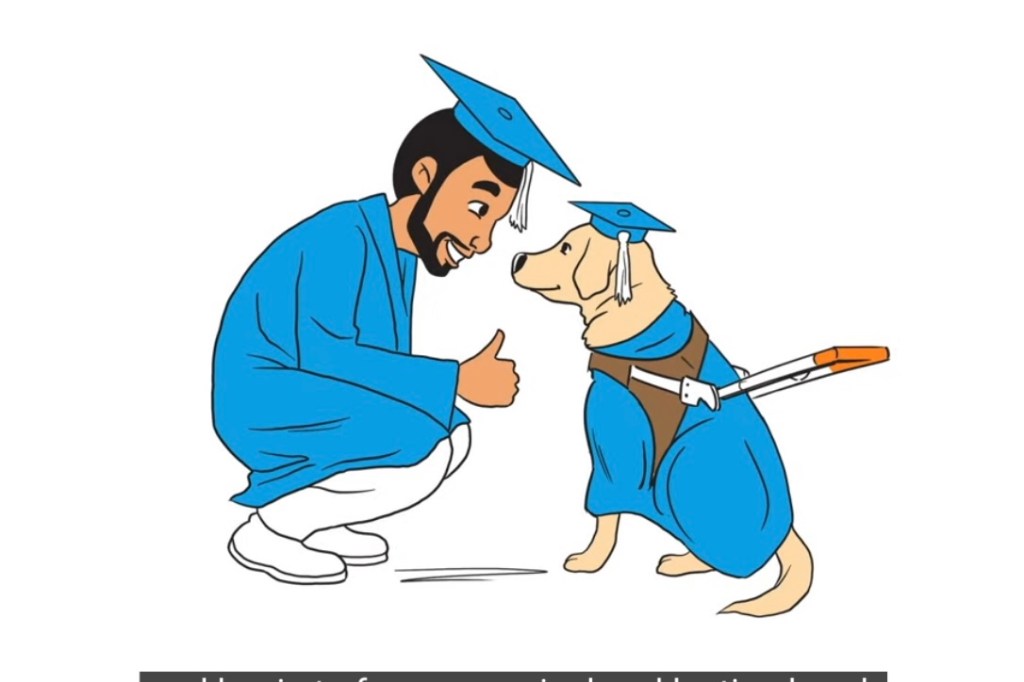
1. Guide Dogs Are Carefully Paired With Handlers Everything from a person’s lifestyle, hobbies, activity level, family, living arrangements, and other pets go into the pairing process when a person applies for a guide dog through a nonprofit organization.
2. The Pairing Process Doesn’t Happen Automatically. A good dog-handler team has a strong bond that is formed through many hours of training together. For many organizations, this bond is strengthened through hours spent training at the organization’s facilities. Dogs and handlers work with professionals before going off on their own.
3. Certain Breeds Are Commonly Used German Shepherd Dogs, Labrador Retrievers, and Golden Retrievers are some of the most common kinds of dogs used as guide dogs. Standard Poodles are also used sometimes for people who have allergies. Guide dog trainers consider a breed’s characteristics when pairing dogs with people, and they pair more active breeds with active people.
4. Training and Socializing Start Young Training and socializing for guide dogs begin when they are very young pups. These processes continue throughout their lives, with many people involved in the process. Some guide dog organizations have their own breeding programs at their facilities. Once puppies reach a certain age (usually around 8 weeks), they go to puppy raisers, who are responsible for socializing and teaching basic obedience. When the dogs are 12-to-18 months old, they return to the organization to begin formal guide dog training with professional instructors. This training can last months, as the dogs progress through the training levels before ever being paired up with a blind handler.
5. A Guide Dog Takes Directional Cues From Their Handler. A guide dog isn’t a GPS, and they cannot read traffic signals. Instead, a guide dog takes directional cues from the handler and is taught to intelligently disobey if there is an unsafe situation in the handler’s path.
6. It’s Important Not to Pet Guide Dogs That Are Working While in their harnesses, guide dogs are working, and you should not pet them. Although they are friendly and adorable, resist your urge to pet guide dogs when you see them working in their harness.
7. Guide Dogs Can Change Handlers’ Lives Guide dogs can bring a great sense of independence to their handlers. Having a trustworthy and loyal canine by your side can bring independence and mobility that canes can’t.
 Doggedly Yours
Be careful and safe…that is the main thing. Thanks for your compliment.
LikeLiked by 1 person
I never knew how much went into training a guide dog. No wonder your fur babies are so special! I did something stupid but interesting the other day. We live on a street that’s a cul de sac with only local traffic. I was exhausted, and out walking Xena. I closed my eyes and let her guide me while listening closely for cars. Only for about a minute or two, but it helped me get a feel for not being able to see. Just a little feel. And thankfully I didn’t get run over! (obviously)
LikeLiked by 1 person
Thank you for this valuable share. 🙏🏻
LikeLiked by 1 person
Glad you enjoyed the audio and text. Thank you.
LikeLiked by 1 person
The folks at GDB are wonderful.
LikeLiked by 1 person
I love this post. thanks for the music too.
LikeLiked by 1 person
LOVED this post and found the audio selections most helpful in understanding just how these amazing creatures are able to do the job they do. Bless you guys for all your hard work!
LikeLiked by 1 person
Thank you. He is the best partner.
LikeLike
Very informative. Happy Guide Dog Month to you and Jonah. You’re a great team,!
xo, Jude
LikeLiked by 1 person