
The first known performance was on August 7 1606 for James and his guest at Hampton Court , his brother-in-law King Christian IV of Denmark. Staged in the Great Hall there it must have been a particularly nervy airing for the play, a situation exacerbated by the sudden illness of boy-actor Hal Berridge, due to play Lady Macbeth. Macbeth is considered one of Shakespeare’s most topical plays. As a dramatization of Scottish history, the play is associated with the reigning king, James I, who was the patron of Shakespeare’s company, the King’s Men.

Specifically, the presence of Banquo in the play, a Scottish nobleman from whom James claimed descent serves to consolidate and reinforce James’s ancient and royal lineage. The central thematic tropes in the play—the specter of treason, the psychological and social impact of regicide, the precariousness of power and the demonic potential of the supernatural—are all subjects that occupied the king.
James believed in the divine and supreme right of kingship, holding regicide to be a cardinal sin. Simultaneously, he lived in fear of assassination and there were numerous attempts on his life. The most significant of these was the 1605 Gunpowder Plot and the failure of this plot to blow up Parliament and the royal family is still celebrated in England as Guy Fawkes’ Day.

The trial and execution of those involved in the plot occupied the public imagination, in particular that of accused conspirator Father Henry Garnet, the author of a Treatise on Equivocation (1598), who employed these principles in his defense. Both the word and the concept of equivocation – as a form of linguistic ambiguity and evasion of the truth – runs through Macbeth.
James was also a strong believer in the diabolical powers of witchcraft. He was an author of a treatise on this threat, Daemonologie (1597), and had presided over the violent persecution of witches in Scotland. Macbeth contains Shakespeare’s most extended engagement with the supernatural in the figures of the witches, the most prominent equivocators in the play. The ambiguity surrounding the extent of their control over the fates of others and the implication that the divine right of kingship is susceptible to manipulation by the occult through James’s obsession with this subject.

While it is clear that Macbeth engages with some of James’s personal preoccupations, it would be problematic to read the play as an unequivocal tribute to England’s new king. Instead, it is the paradoxical and incongruous nature of the play—a hero who is also a villain, the competing dominance of individual agency and supernatural forces, and a pattern of linguistic and syntactical ambiguity—that makes it compelling and insures it against any such simplistic reading.
James became King James I of England in 1603, and his new subjects were keen to appease him and his views on the demonic. Christopher Marlowe’s Doctor Faustus was published in 1604, and its shocking portrayal of witchcraft and association with the devil intensified England’s fear of sorcery.
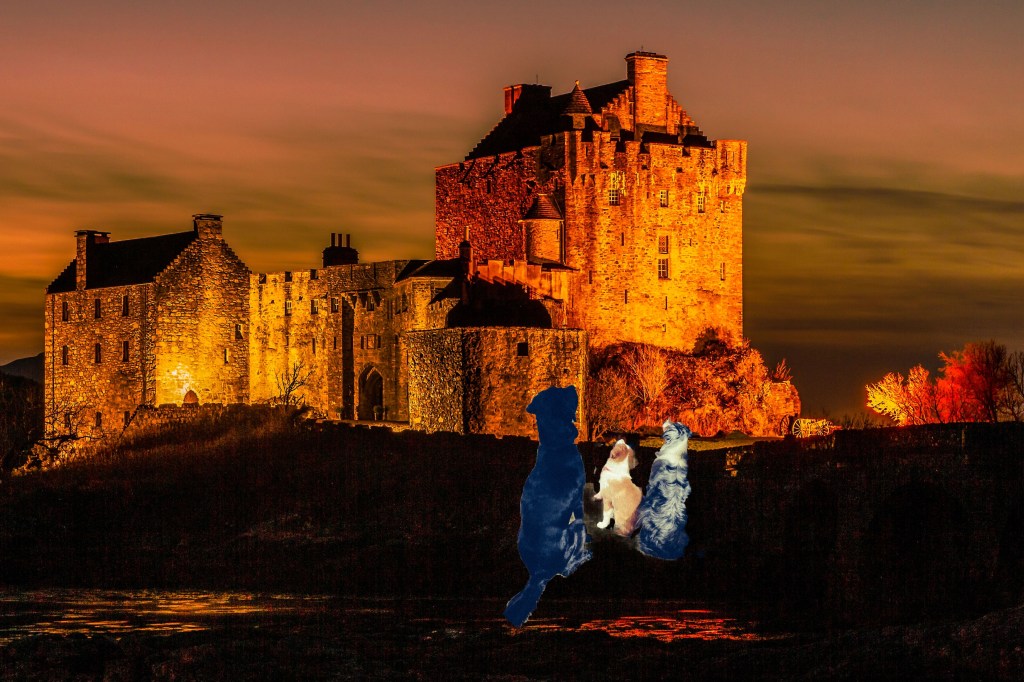
Shakespeare’s Macbeth followed in 1606 with direct references to James’ earlier misfortune at sea: ‘Though his bark cannot be lost, Yet is shall be tempest-tost’. Shakespeare was also said to have researched the weird sisters in depth; their chants in Macbeth, and ingredients of fenny snake, eye of newt and toe of frog, are supposedly real spells.
SOURCE: Columbia College, Royal Shakespeare Company


When I lived in London I used to go quite often. They have a theater in London. So it was easy to go.
LikeLike
What grand connections. I d love to see the RSC.
LikeLiked by 1 person
He is an excellent actor. I loved him in Star Trek next generation. I hope he makes lots of money on residuals from reruns of that show. I have also seen him live in London in a play with the Royal Shakespeare Company. I have also played Lady Macbeth when I worked as an actor. That was a looong time ago.
LikeLiked by 1 person
Yes, there stories of bad luck misfortune are long lived. Fortunately, I am not in a theatre…so we can use the name Macbeth…. at least I hope so. Hope you enjoyed the audio of Patrick Stewart as I am a fan.
LikeLiked by 1 person
“The Thane of fife had a wife ….where is she now” That and “out out damned spot ,will these hands ne’er be clean” are two lines I remember from macbeth.Did you know that in the theatre it is considered Very Bad Luck to quote from this play or even say the name of the play!!!
LikeLiked by 1 person
Patrick Stewart’s voice is so perfect! Love it.
LikeLike